
Connecting Asia through social innovation and opening opportunities for collaboration on sustainable products and services
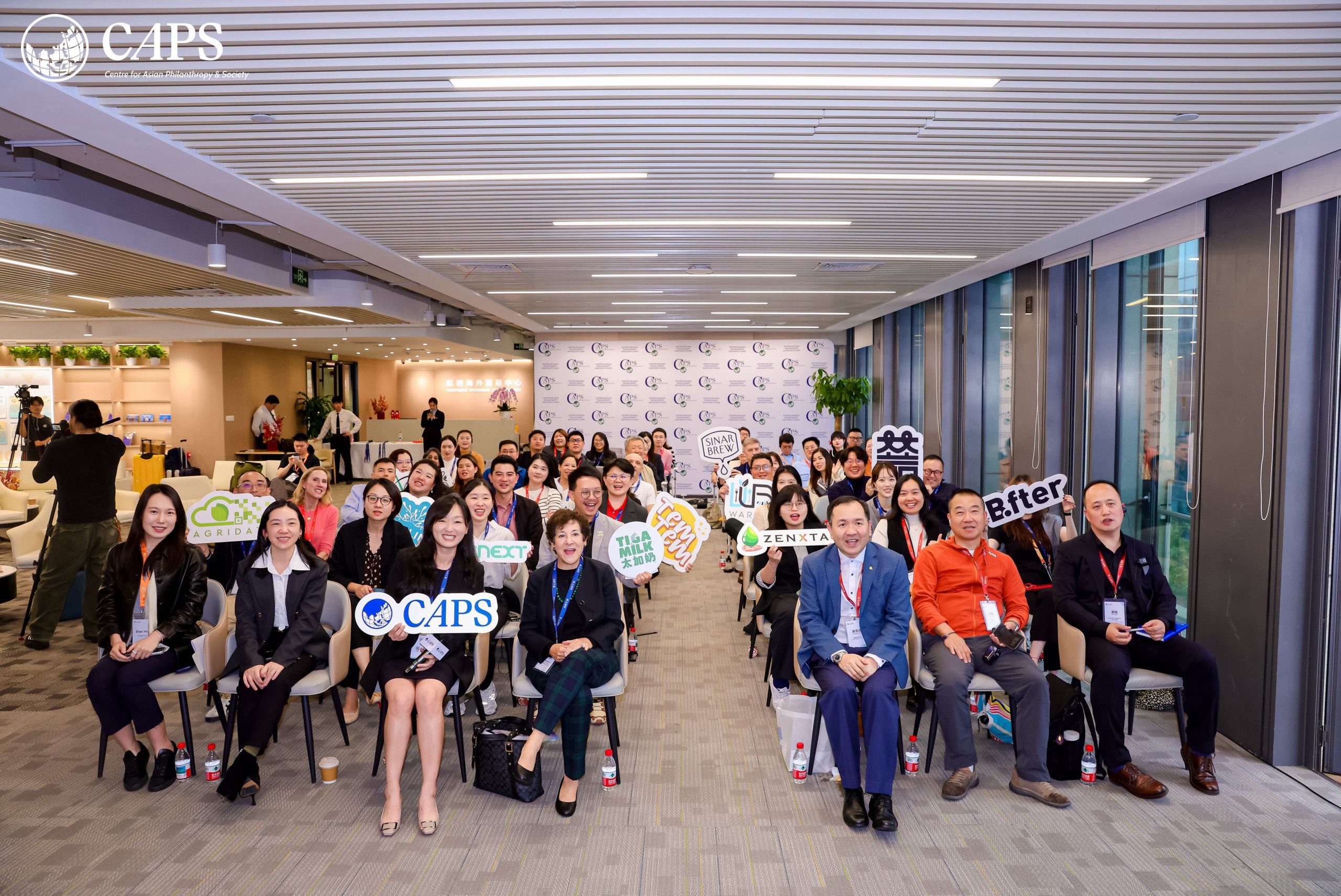
SHANGHAI, 5 November 2026 — The Centre for Asian Philanthropy & Society (CAPS) held a launch event and business showcase for its Asian social enterprise delegation in Shanghai on 4 November 2026. Thirteen social enterprises from Malaysia, Sri Lanka, South Korea, Thailand and Hong Kong SAR are presenting products and solutions across consumer goods, food and agriculture, and technology and equipment at the 9th China International Import Expo (CIIE), seeking partnerships with Chinese buyers, distributors, investors and industry partners.
This marks the first time that social enterprises have exhibited their products and services at CIIE. With support from the Shanghai Hongqiao International Central Business District Administrative Commission, CAPS has mobilized its network to identify social enterprises who want to explore the Chinese market.
From scented oil pastels that help people with visual impairments distinguish colors, to color-changing food freshness labels and technologies that increase the value of agricultural produce, the participating enterprises combine commercial activity with responses to social and environmental challenges. They bring products and partnership opportunities that offer both practical value and social benefits to the Chinese market.
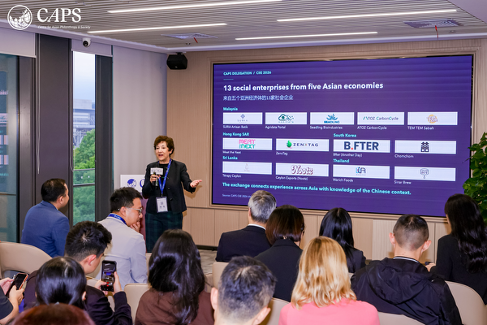
“Social enterprises use business models to address social and environmental needs. To understand how they achieve social impact, we need to look at whom they serve, how they earn revenue and the support they need at different stages of development,” said Dr. Ruth A. Shapiro, Co-Founder and Chief Executive of CAPS, in her keynote remarks for the launch event. “We hope this exchange brings experience from across Asia together with Chinese partners’ understanding of local needs and markets, so we can learn from one another about how to better serve communities and continue these conversations beyond CIIE.”
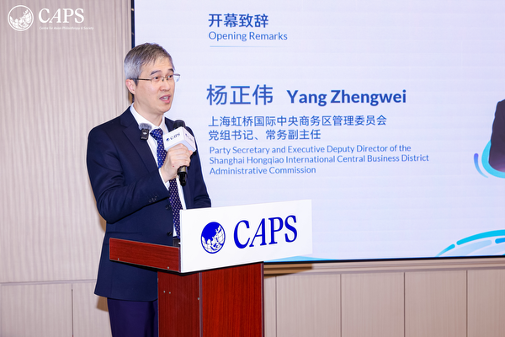
“Hongqiao connects the Yangtze River Delta with international markets, providing an important platform for trade, investment and innovation partnerships for businesses of all kinds. We welcome Asian social enterprises to use CIIE to showcase their products, connect with market needs and explore collaboration with Chinese partners, bringing more innovations into practical use and contributing to sustainable development across the region,” said Yang Zhengwei, Party Secretary and Executive Deputy Director of the Shanghai Hongqiao International Central Business District Administrative Commission, in his welcome remarks for the launch event.
Bringing social innovation to market
The participating enterprises show how decisions about sourcing, production and product design can support livelihoods, reduce waste and make products more accessible.
In food and agriculture, Thailand’s Warich Foods processes bananas into freeze-dried snacks and helps farmers learn to produce banana flour, expanding their options for selling their crops. Sri Lanka’s Nootz makes shelf-stable coconut milk smoothies to reduce post-harvest losses, while Thailand’s Sinar Brew uses fermentation to increase the value of local fruit. Malaysia’s TEM TEM Sabah creates local employment by developing ready-to-eat foods and snacks from traditional tempeh. Sri Lanka’s Térapy Ceylon builds its own tea brand to retain more economic value in the country of origin.
Other enterprises connect livelihoods and inclusion with product development. Malaysia’s SURIA Artisan Batik brings traditional hand-painted batik to contemporary markets, providing production opportunities for artisan groups, including single mothers. South Korea’s ChomChom combines products made by older artisans and farmers with student designs in gift collections. South Korea’s B.fter pairs oil pastel colors with corresponding scents, helping people with visual impairments participate in art.
Technology also plays a role. Hong Kong SAR’s ZenxTag uses color-changing labels to indicate food freshness and help reduce waste. Meat the Next connects plant-based beverage production with the cultivation of degraded land in northern China. Malaysia’s Seadling works with local seaweed farmers to produce ingredients for products including pet food. Malaysia’s ATOZ CarbonCycle uses microalgae and black soldier fly technologies to explore carbon capture and organic waste recovery. Malaysia’s Agridata Portal connects agricultural finance, farm management and sales through a digital platform.
“Behind every product is a series of choices: who supplies it, who gains employment and who can use it,” said Angel Chiang, Director of Research and Advisory, Greater China and Chief Representative of the Shanghai Representative Office of CAPS. “These choices show how a business creates social value and provide a concrete starting point for dialogue between Chinese businesses, local partners and social enterprises. From there, we can explore how these models work, the conditions they need and the opportunities to work together.”

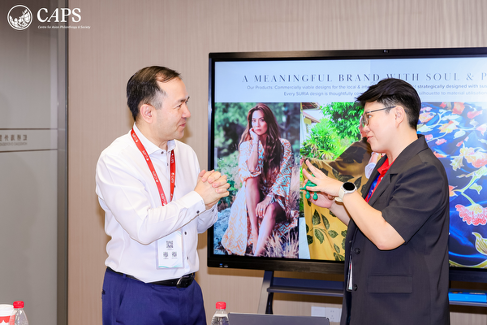
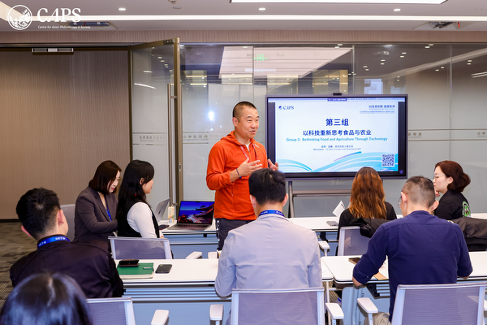
At the launch event, the 13 social enterprises presented their businesses and discussed opportunities for product imports and distribution, corporate gift procurement, technology licensing, joint production and investment in production capacity. Chinese companies, investors, distribution partners and media representatives took part in the exchange. Lü Zhao, Founder and Chairman of the social enterprise incubator NPI; Xia Xuan, CEO of the China Social Enterprise Certification Platform and Shenzhen Social Innovation Star Center for Social Enterprise Development; and Professor & College Master Howard Ling, Hong Kong Baptist University, were invited to offer feedback and advice.
Connecting regional partners to support social enterprise development
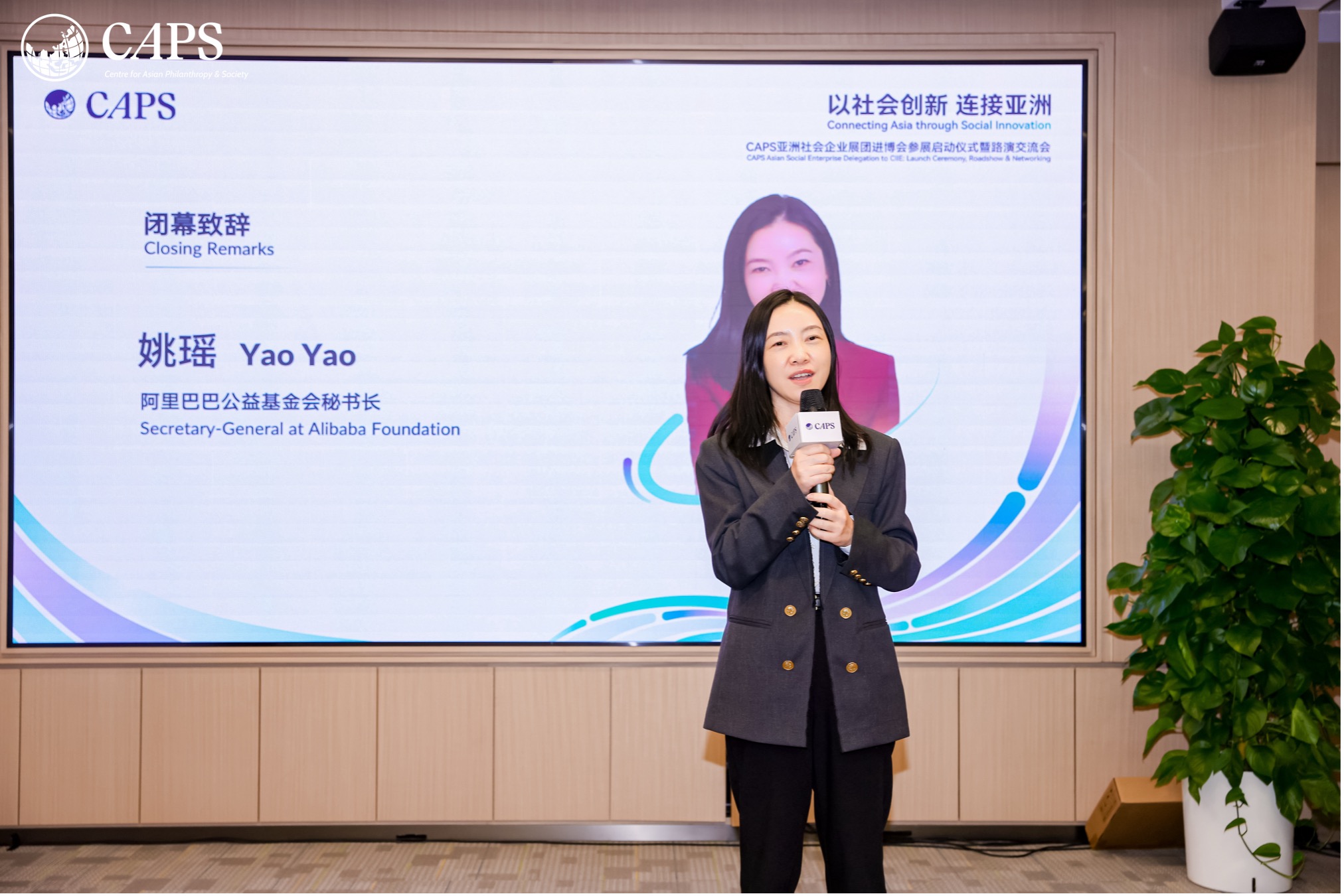
“Trade has always been an important vehicle for connecting value. The China International Import Expo (CIIE) is a major event for both China and global trade, offering companies around the world an important opportunity to connect with China. CAPS bringing Asian social enterprises to the CIIE is a clear reflection of inclusive trade and business for good. Starting from concrete needs, these social enterprises have built innovation into their products and services, and they have given us much inspiration. We hope this exchange will be a starting point for building more connections among Asian businesses, philanthropic organizations, and social innovators, so that together we can explore ways for good products and good methods to benefit more people,” said Yao Yao, Secretary-General of the Alibaba Foundation, in her closing remarks for the launch event.
Meet the social enterprises at CIIE
The 13 social enterprises will exhibit their work in Halls 3H, 6.1 and 7.1 at the National Exhibition and Convention Center in Shanghai. Visitors and media representatives are welcome to meet the enterprise representatives, learn how their products and services address social needs and explore the relevance of their experience to China.
About the Centre for Asian Philanthropy & Society (CAPS)
Established in 2013 and working across more than 17 economies in Asia, the Centre for Asian Philanthropy & Society (CAPS) is a nonprofit organization committed to improving the quantity and quality of philanthropic and private giving throughout Asia. Our mission is to maximize private capital for public good, conducting research, advisory, convening and capacity-building to engage philanthropists, foundations, family offices, corporates, government bodies, social sector organizations and experts on best practices, models, policies and strategies to facilitate private giving and social investment in the region. For more information, visit caps.org and LinkedIn.
About the CAPS Shanghai Representative Office
Registered in Shanghai in September 2025, the CAPS Shanghai Representative Office focuses on philanthropy research, social investment practice, advisory services, capacity building and regional exchange. It connects experience from across Asia with local needs in China, providing professional support to businesses, foundations and family offices.
Media contact: Julianna Barcela | comms@caps.org
CAPS Media Kit 2026 (Photos and Press Releases in English & Chinese)
Asian Social Enterprises at the CIIE 2026
01|ATOZ CarbonCycle
Malaysia · Intelligent Industry & IT
Founded by a team of scientists in 2022, ATOZ CarbonCycle explores ways to combine microalgae carbon capture, organic-waste treatment and agricultural production. The company uses microalgae to absorb carbon dioxide and applies carbon-rich algae water to soil, while black soldier fly larvae convert organic waste into protein and fertilizer. According to the company, its system can process around one metric ton of organic waste per month, producing approximately 150 kg of protein and 80 kg of fertilizer. ATOZ also works with project funders to support farmers adopting regenerative agriculture and collect related data. School-based “living laboratories” provide environmental education while contributing to data collection.
02|B.fter
South Korea · Consumer Goods
B.fter pairs each color of its oil pastels with a distinctive scent, helping people with visual impairments draw through smell and touch. Developed by the Korean company Another Day, the brand grew from a research participant’s wish to draw after years of blindness. According to the company, 500 people with visual impairments and welfare practitioners contributed to developing the range of around 100 colors. Color–scent pairings are adapted to cultural contexts in different markets, and the pastels are also suitable for sighted users. Products are available through Kakao and Kyobo Book Centre in South Korea, and Merci and Nature & Découvertes in France. The brand also exhibited at Maison & Objet in Paris in January 2026.
03|SURIA Artisan Batik
Malaysia · Consumer Goods
SURIA Artisan Batik brings contemporary design to Malaysia’s traditional hand-painted batik craft. Founder Intan Suria drew inspiration from the batik fabrics, dyes and tools she discovered among her late mother’s belongings. Established in 2017, the company handles design, color development and training, while partner artisan groups undertake production. Participants include single mothers, low-income households and UNHCR-registered refugees. Fabric remnants are also used to make gifts. According to the company, its network includes around 40 artisan groups, and its products are sold through Malaysian resorts and corporate-gifting channels, with overseas reach extended through a partnership with Los Angeles sustainable brand Ocean & Main.
04|Agridata Portal
Malaysia · Food & Agriculture
Agridata Portal operates an agricultural digital platform in Sabah, Malaysia, linking finance, farm management and sales. Founder Matthew Johnny Kulai returned home after university to build a business that could help make farming a career option for young people. Through AG Fund and Sabah Credit Corporation, the company provides interest-free loans to farmers underserved by conventional banks. Its own farm-management system supports cultivation, with instructions delivered through WhatsApp. AG-Market then connects growers to vegetable sales, displaying farmer information on product packaging. According to the company, its database covers more than 30,000 farmers, approximately RM2.5 million in interest-free loans has been provided, and partner farmers can receive 50% of net profits under its profit-sharing model.
05|Chomchom
South Korea · Food & Agriculture
Chomchom brings products and designs from several social enterprises into a gift collection that connects rural production, employment for older people and young designers’ creativity. A project of Korean family office Heren Corporation, its name means “tightly woven” in Korean. Caramel sandwich cookies are made by a social enterprise working with more than 150 older artisans and farmers; keyrings are made from donated toys at a factory employing older people; and students contribute designs featuring auspicious cranes, carp, turtles and tigers. According to materials provided by the company, the Korea Chamber of Commerce and Industry selected Chomchom gift boxes as official gifts for the APEC CEO Summit in Gyeongju in October 2025.
06|TEM TEM Sabah
Malaysia · Food & Agriculture
TEM TEM Sabah develops the traditional fermented food tempeh into ready-to-eat products and snacks. By processing products and building its brand in Sabah, it creates local employment and markets for agricultural produce. Founder Cherry Ding began in a home kitchen during the pandemic, developing ready-to-eat steamed tempeh and tempeh chips. According to the company, its steamed tempeh contains no preservatives and keeps for 15 months at room temperature. Products are sold in seven markets, with retail and hospitality partners including AEON, Jaya Grocer, Shangri-La and Hyatt. The company employs disadvantaged young people and single mothers, and contracts 75 farming households in Sabah’s highlands to supply heirloom Tadong red rice.
07|Meat the Next
Hong Kong SAR, China · Food & Agriculture
Founded at Hong Kong Science Park in 2020, Meat the Next connects plant-based beverage development with agricultural supply chains. Co-founder Edmund Chan has a background in food and beverage and is himself lactose intolerant. The company’s TIGA MILK combines tiger nuts, oats and non-GMO soy, with no added sugar. According to the company, its products are stocked at more than 5,000 retail and food-service locations in Hong Kong, and its collaboration with Pacific Coffee has reached customers on more than 100,000 occasions. On the sourcing side, Meat the Next works with farmers in northern China to grow tiger nuts and reports that its related projects have returned around 15,000 mu of degraded land to cultivation.
08|Nootz
Sri Lanka · Food & Agriculture
Nootz is a coconut milk-based smoothie developed by Ceylon Exports to extend the usable life of fruit and reduce post-harvest losses. In 2018, founder Dulara de Alwis took over a Sri Lankan factory facing closure, gradually expanding the business to more than 20 countries and investing in the development of shelf-stable smoothies. According to the company, Nootz uses three organic ingredients, contains no preservatives or added sugar, and keeps for 18 months without refrigeration. The company buys from partner farmers during peak harvest periods, processing perishable ingredients into products that are easier to store and transport. By its own count, this has prevented more than 1,000 metric tons of post-harvest losses.
09|Seadling
Malaysia · Food & Agriculture
Seadling connects marine-resource use with coastal livelihoods through seaweed cultivation and processing. Co-founded in 2018 by Simon Davis and seaweed researcher Melania Cornish, the company maintains its own seed bank and uses a patent-pending fermentation process to turn tropical seaweed into functional pet-food ingredients and plant biostimulants. In Borneo, it provides growers with improved seedlings and training, purchasing their entire harvests through direct contracts. According to the company, its network connected around 294 seaweed farmers in 2025, and it trained 310 women. Its products have been exported to selected Southeast Asian markets, the United States and the United Kingdom.
10|Sinar Brew
Thailand · Food & Agriculture
Sinar Brew grew out of three generations of vinegar-making in Nakhon Sawan, Thailand. Third-generation founder Thichamon Itthipanichpong began with kitchen experiments in pineapple and passion fruit, and later combined traditional knowledge with modern biotechnology, working with Thailand’s National Center for Genetic Engineering and Biotechnology (BIOTEC) to develop a one-step fermentation process. This turns tropical fruit into vinegars that can be stored and transported over longer periods. By keeping processing, product development and brand operations in Thailand, the business adds value to local agricultural produce. Its flagship Pineapple Cider Vinegar is naturally fermented and unfiltered, with no added sugar or artificial preservatives, and the range also includes passion fruit vinegar. Selected for Tops Tongtin, Central Retail’s Thai SME program, its products are sold through selected Tops and Central Food Hall stores and Shopee in Thailand. According to the company, it has completed the relevant registration with China’s General Administration of Customs.
11|Térapy Ceylon
Sri Lanka · Food & Agriculture
Térapy Ceylon was founded in 2022 by Ruvi Ranasinghe, who comes from a tea-exporting family. Seeing Sri Lanka export bulk tea while blending, packaging and brand development often took place overseas, she sought to retain more economic value at origin by building a Sri Lankan brand. Térapy Ceylon combines Ceylon tea with Ayurvedic herbs in blends developed with Ayurvedic doctors. Botanical ingredients are sourced from local traditional herbal practitioners and rural communities, with suppliers setting their own prices. According to the company, production takes place in facilities holding multiple food-safety and quality-management certifications. Its products are sold in the United States, and it is expanding into Europe. The company focuses on its own brand and does not undertake private-label production.
12|Warich Foods
Thailand · Food & Agriculture
Warich Foods broadens market options for Thai banana farmers through two processing approaches. It uses equipment of its own design to turn whole bananas into Banana Pop freeze-dried snacks, while teaching farmers to process green bananas into flour soon after harvest. This allows growers to choose between selling fresh fruit and processing it according to market prices. Founder Thanan Thanatawee previously worked in seafood exports and began helping banana farmers facing sales difficulties around 2022. According to the company, its freeze-dried banana products are supplied to 7-Eleven in Thailand, and the company receives repeat orders from retail customers in South Korea, but current capacity cannot meet some Chinese customers’ requirements. Warich plans a new factory in Thailand’s banana-growing region, targeting around 20 containers a month, with half the capacity intended for the Chinese mainland and Hong Kong markets.
13|ZenxTag Technology
Hong Kong SAR, China · Intelligent Industry & IT
ZenxTag translates information about food condition into visible color changes, providing a reference for assessing freshness. The technology originated with Professor Michael Hon-wah Lam’s chemistry research team at City University of Hong Kong and was brought closer to commercialization by alumna Giselle Chow through the HK Tech 300 program. Its labels do not require direct contact with food, and three sensing inks indicate durian ripeness, meat spoilage, and fruit and vegetable freshness. According to the company, labels cost less than RMB 1 each, with production capacity of around 400,000 per month. Manufacturer pilots reported approximately 25–30% less food waste after using the labels.