


Korea has adopted generative AI faster than any other country in the world. The non-profit sector is no exception. According to a survey by The Beautiful Foundation, 92.7% of Korean non-profit workers are already utilizing generative AI in their work. However, only 26.8% have adopted generative AI at the organizational level. This means that while nine out of ten workers are prepared, three out of four organizations are not.
The ‘AI gap’ in the non-profit sector is not unique to Korea. According to the ‘DGI (Doing Good Index) 2026’ report, which analyzes the environment of public interest activities across Asia, only one in eight organizations in 17 Asian economies regularly uses AI to solve social problems. Organizational adoption rates are low everywhere, and by this standard, Korea actually leads. However, the figure of 92.7% for individual AI utilization is difficult to find in any other economy. Korea is also the only place where the gap between individuals and organizations is so large and distinct.
It is not just a matter of cost. Individuals can use applications that are free or nearly free. Nor is it a lack of individual capability. Most non-profit workers in Korea have learned how to utilize AI on their own. What has not yet been established is organizational capability. There is a lack of capacity to determine what to develop and what to purchase, whose data to utilize, and who will manage the system after the person who spearheaded the adoption leaves. The problem is not the AI model itself.
The Centre for Asian Philanthropy and Society (CAPS) surveyed 220 ‘AI for Good’ projects in the Asia-Pacific region and interviewed 42 organizations across 10 economic blocs. During the investigation, one image repeatedly came to mind: the social sector continues to buy cars without building roads.
Cars are highly visible and easy to support. They are also excellent tools for demonstrating results. Roads are infrastructure that enables not just a single car, but countless vehicles to travel. These roads consist of three parts: people who can use technology and adapt it to the situation, systems that include available data and governance, and sustainability that allows tools to continue operating even after initial funding is exhausted. However, resources are concentrated solely on cars, and are not sufficiently invested in these three foundations. Leading AI models may change in a year, but the roads on which they travel do not.
What happens when roads are cut off? The Indian non-profit organization Rocket Learning developed an AI-based WhatsApp service that guides parents with young children on parenting methods. The service showed notable results, and the number of users increased. However, this growth became a problem that Rocket Learning could not handle. With every additional user, message sending fees and AI model usage fees were added, and Rocket Learning stated that it was difficult to secure sufficient funds to cover the costs required for large-scale operations.
We call this the ‘success penalty.’ Services that rely heavily on AI models see their costs increase as the number of users grows. This means that a business can be shut down not because of insufficient performance, but because it was successful. In this study, the costly failures were not due to poor-performing tools; they were good tools that could no longer run because the road was cut off.
Then why are roads rarely constructed? It is because the market is structured in a way that makes it difficult to supply funds for roads. The benefits generated by roads cannot be monopolized by the entity bearing the cost but are dispersed across the entire social sector. Furthermore, returns from the investment only appear several years after expenditures are made. Since no single entity can reap sufficient value, everyone waits for someone else to step forward first.
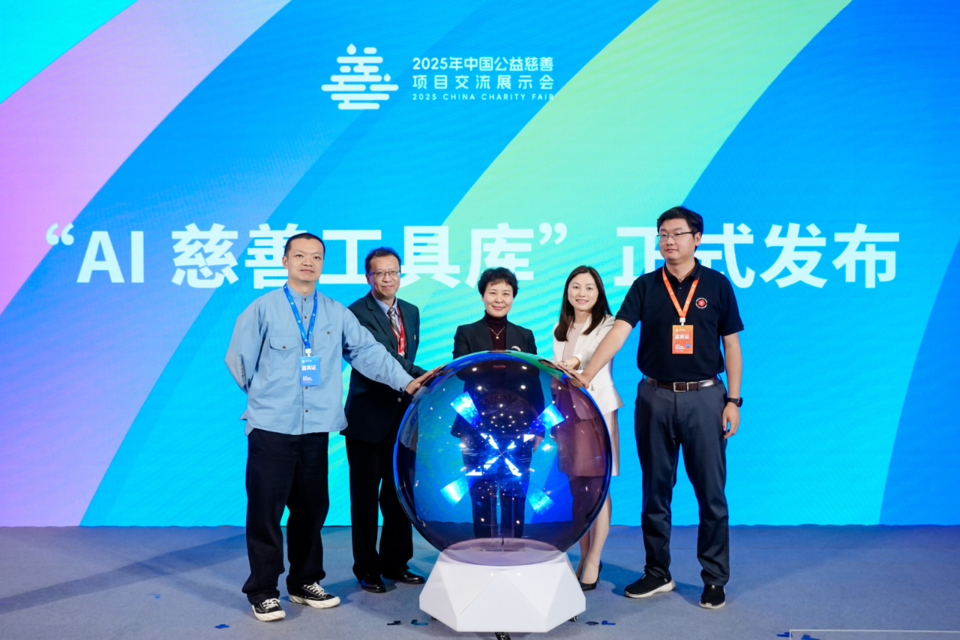
Japan took on the role of the human foundation. Since 2023, NTT Data has been operating the “NP Tech Initiative” in partnership with the Japan NPO Center. Subsequently, companies such as Dell and Intel also joined. Over the past three years, approximately 500 non-profit organizations have learned through this program what AI can and cannot do. Koichi Kaneda, who leads the program, distinguishes this from traditional philanthropy by calling it “digital philanthropy.” While non-profit organizations face the same challenges of technology adoption as business teams in general corporations, they face greater constraints on available resources. Data accumulated in the field is reused to improve corporate products. A portion of the value is returned to the entities that helped build the road. However, limitations are also inherent. Since capabilities are accumulated by cohorts participating in the training, the human foundation represents the slowest and most costly segment of the road.
Viewing the two cases together reveals the structure of the division of roles. The Japanese program returns value to the company that operates it. In contrast, the value generated by the Chinese toolkit does not accrue to any specific company. This is why it was necessary to bring competing companies together to facilitate joint construction. Building a complete road requires both corporate interests and long-term, public-interest funding. A road has never been completed solely by market forces.
Now, the question returns to Korea. Few countries possess conditions as favorable as Korea’s. Korea has users who adopt AI the fastest in the region, as well as an abundance of technical talent. It also boasts companies that develop their own massive language models, such as SK, Naver, and Kakao.
It is not as if Korean tech companies are starting out without a foundation. The Kakao Impact Foundation is already connecting engineers with social innovators and providing cloud resources to non-profit AI projects. Naver Happybean has been building a foundation connecting donors and non-profit organizations for the past 20 years. This represents the initial section of the road connecting people and systems.
The position that remains vacant is that of a support organization responsible for sustainability, which serves as the third foundation. We must ensure that tools that have borne costs for years since the project began and produced results do not face disadvantages simply for achieving those results. Korea possesses domestic AI model development companies and a 20-year foundation of connecting businesses and non-profit organizations. In essence, it already possesses the necessary elements to fill this role.
Aid organizations across Asia, from Jakarta to Mumbai, are facing the same choice. CAPS published the report “Cars Without Roads” precisely to assist them in making this decision. However, someone needs to show the Asian region what a fully constructed road looks like. South Korea, where nine out of ten non-profit workers are already behind the wheel, is the most suitable place to take on this role. This is not merely a matter of charity; the roads currently being built will serve as the foundation upon which AI will travel for the next decade.
This article was first published in Korean in The Butter and is part of the Innovation Column.