

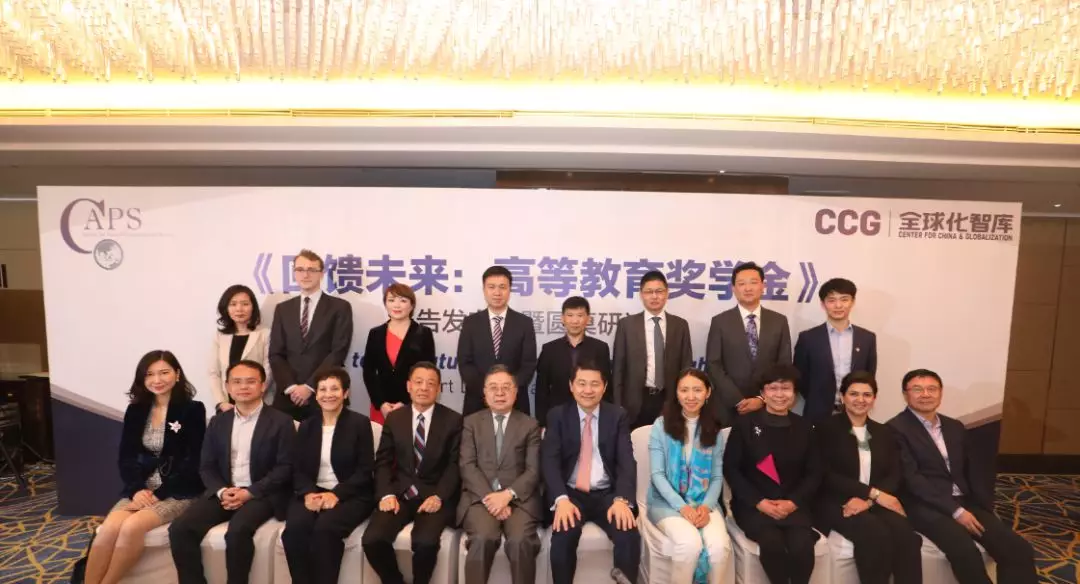
The charitable scholarship not only has a transformative impact on the recipients, but also brings more hope and light to the whole society, so the social influence of this cause continues to expand. On April 13, 2019, the joint report conference and roundtable seminar of the Asian Center for Philanthropy Research (CAPS) and the Think Tank for Globalization (CCG) was held at the China World Hotel in Beijing. At the meeting, CCG and CAPS jointly released the first research result on the influence of university scholarships – “Giving Back to the Future: Higher Education Scholarships”, and held a charity award ceremony. The conference brought together many Chinese philanthropists and charitable organizations, and received extensive attention from all walks of life.
The conference was opened by Dr. Wang Huiyao, Chairman of the Global Think Tank (CCG), and a keynote speech by Mr. Chen Qizong, Co-Chairman of the Global Think Tank (CCG), Chairman of the Asian Center for Philanthropy and Society, and Chairman of Hong Kong Hang Lung Properties. After the speech, Ruth Shapiro, founder and CEO of the Asian Center for Philanthropy and Society (CAPS), and Mehvesh Mumtaz Ahmed, research director of the Asian Center for Philanthropy and Society (CAPS), gave an in-depth introduction to the content of the report.
During the seminar, Li Yinuo, Chief Representative of the Beijing Representative Office of the Bill & Melinda Gates Foundation, Justin Vaisse, Director General of the Paris Peace Forum, Liu Changyu, Secretary General of Heren Foundation, Wang Wang, Senior Vice Chairman of CCG and Chairman of Fazheng Group GF, CCG Vice Chairman, Founder and CEO of Kuan Capital Guan Xin, CCG Deputy Director and Secretary-General Miao Lu were invited to attend and participate in the seminar.
The “Giving Back to the Future: Higher Education Scholarship” report is the first research result on the impact of university scholarship. It focuses on analyzing the development status and future direction of philanthropic scholarship, and comprehensively evaluates the impact of charitable scholarship on individuals through a large number of data analysis and case studies. , society and the state, and points out key ways to maximize the return on social investment. In addition to research evidence and recommendations, the report also shares moving stories from scholarship winners and prominent Asian educational philanthropists from China, India and the Philippines.
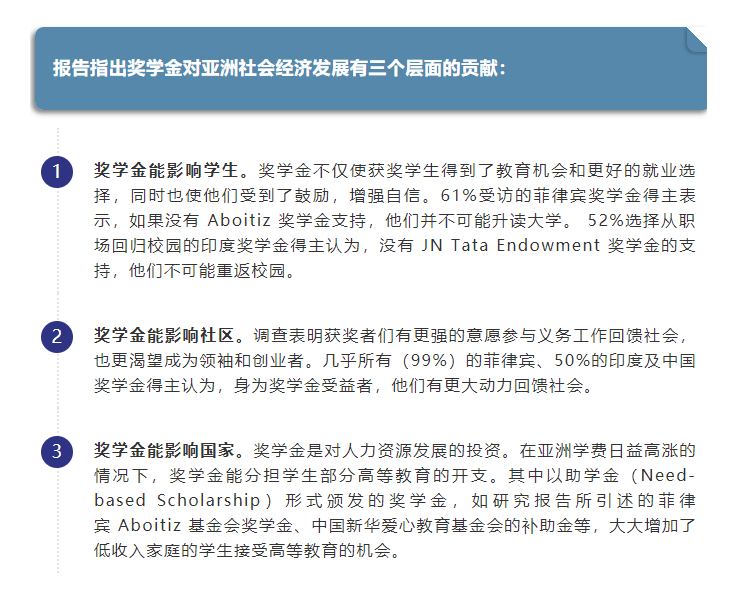
The report shows that one scholarship improves the lives of an average of 26 people. Students who receive scholarships can not only create a better future for themselves and their families, but also help others and give back to society through leadership, volunteer work, or civic engagement.
In addition, the “Giving Back to the Future: Scholarships in Higher Education” report provides a tip for designing scholarship programs to help Asian philanthropists increase the efficiency of educational investment and increase the impact of scholarship programs.
This achievement fills the gap in research and evaluation of the impact of scholarship programs in Asia, and takes a crucial step in improving the understanding of scholarship programs in all walks of life. Philanthropists, foundations and universities in Asia and around the world are of considerable value.
The public welfare award ceremony was also held at the press conference. Chen Qizong, Co-Chairman of Global Think Tank (CCG), Chairman of Asia Center for Philanthropy and Society, Chairman of Hong Kong Hang Lung Properties, was Chairman and President of Beijing Fazheng Group and President of Wangfu School. GF, Guan Xin, founder and chairman of Kuan Capital, Wang Linda, chairman of Yihai Group, and Heren Charity Foundation and other philanthropists and charitable organizations with outstanding contributions awarded the Philanthropy Award in recognition of their contribution to China’s philanthropy and education. Make outstanding contributions and encourage more social philanthropists to devote themselves to charitable scholarships, bringing more vitality and hope to talent cultivation in China and Asia.
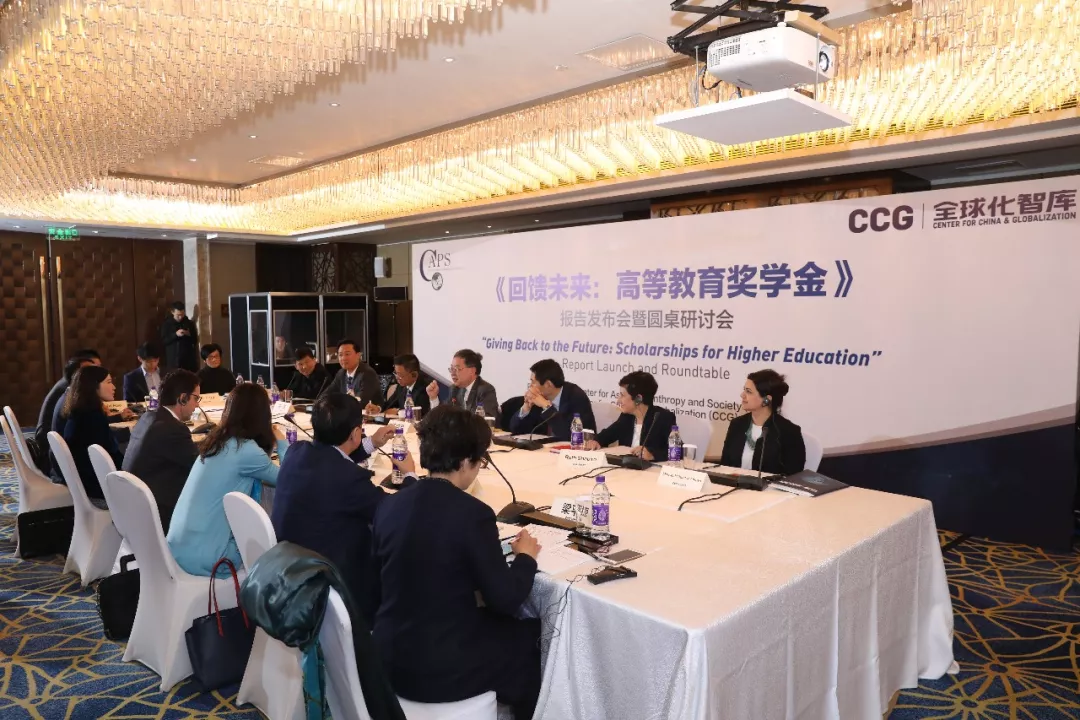
Also participating in this report conference and roundtable discussion are Qiu Yufeng, executive director of CCG and CEO of Hangzhou Ruobilin Robot Technology Co., Ltd., Xing Naigui, director of CCG and executive director of Beijing Huada Zhongke Information Technology Research Institute, director of CCG, Hainan Yunlian Wang Yang, Deputy Director of the Management Committee of the Law Firm, Liang Pingjie, Deputy General Manager of Yihai Education Group, Happy Harun, General Manager of Special Projects of the Chairman’s Office of Hang Lung Properties, Hao Ruixi, Project Manager of the Beijing Representative Office of the Bill & Melinda Gates Foundation, You Zhou Xingyi, Project Officer of Cheng Foundation.
Established in Hong Kong in 2013, the Asian Centre for Philanthropy Research (CAPS) is an action-oriented research and consulting organization dedicated to improving the quality and quantity of charitable donations in Asia. By understanding the fundamental strengths and cultural heritage of the Asian region, CAPS is committed to promoting the development of the Asian social investment community through research and promotion of public policies that are most conducive to private social investment. At the same time, CAPS research also focuses on improving the resource utility of philanthropists and the effectiveness of social organizations.
Global Think Tank (CCG), China’s leading international social think tank, was established in 2008, headquartered in Beijing, with more than ten branches and overseas representatives at home and abroad, and currently has more than 100 full-time researchers and professionals, dedicated to Research in the fields of globalization, global governance, international relations, talent internationalization, and enterprise internationalization. In addition, CCG also pays attention to the development of philanthropy in the world. Previously, it held Sino-US Philanthropy Seminars in New York and Washington, and released the “China-US Philanthropy Comparative Research Report”.
Click here to read the original text